
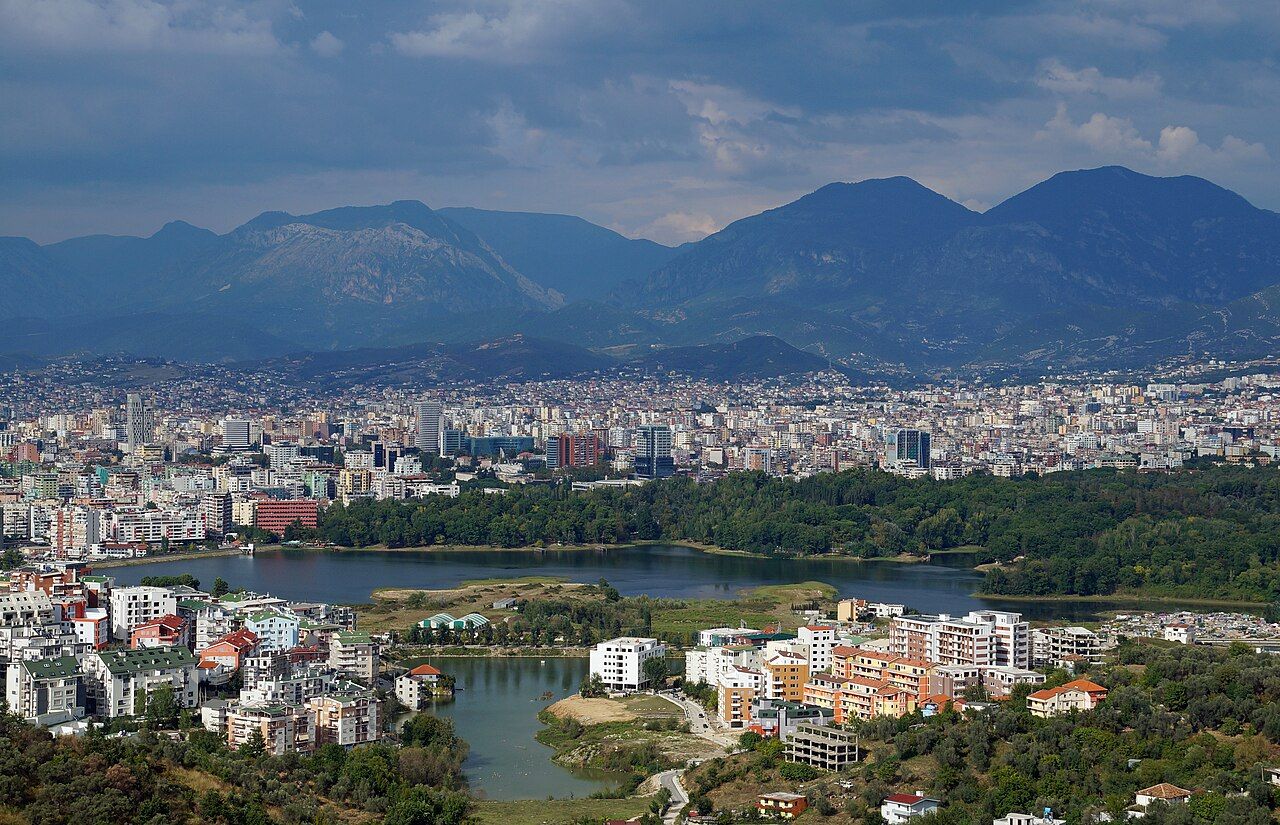
Tirana has changed fast since the early 1990s, when Albania emerged from decades of strict communist rule. Today it is a lively, noisy, colourful capital, with a huge pedestrian square, parks, museums in Cold War bunkers and a nightlife district on the site of the old leadership's private quarter. From Pristina, a modern motorway makes it an easy weekend trip.
The city is compact enough to explore on foot, and two days give you time for the main sights without rushing.
Skanderbeg Square and the centre
The centre of the city is Skanderbeg Square, a wide, mostly pedestrian space named after the fifteenth-century Albanian leader whose equestrian statue stands at one end. Around it stand the National History Museum, with a large mosaic on its facade, the Opera and Ballet Theatre, the Et'hem Bey Mosque and the Clock Tower. The mosque, with its painted interior, is open to visitors outside prayer times; dress modestly and remove your shoes.
The National History Museum covers Albania's story from ancient times to the twentieth century. Allow a couple of hours, and check opening days before you go, as they can change.
A short walk south along the main boulevard brings you to government buildings, the university and the Grand Park. To the north-east, the streets around the New Bazaar, the old market area, are full of fruit and vegetable stalls, small grocers and simple places to eat. It is one of the best parts of the city for a cheap lunch.
The Bunk'Art museums
Under communist rule, Albania built a vast number of bunkers across the country. Two of the largest in Tirana are now museums. Bunk'Art 2, close to the centre, sits in a bunker built for the interior ministry and deals with the history of the police and the secret police. Bunk'Art 1, on the eastern edge of the city near the foot of Mount Dajti, is a much larger underground complex with exhibitions on the country's twentieth-century history.
Both are sobering and well worth the time. Bunk'Art 1 takes a few hours and is reached by city bus or taxi, so many visitors combine it with the Dajti cable car.
On the edge of Blloku, a small open-air memorial called Postbllok displays a section of the Berlin Wall beside a concrete bunker. Together they make a quiet stop that gives context to the bunkers and to the country's long years of isolation.
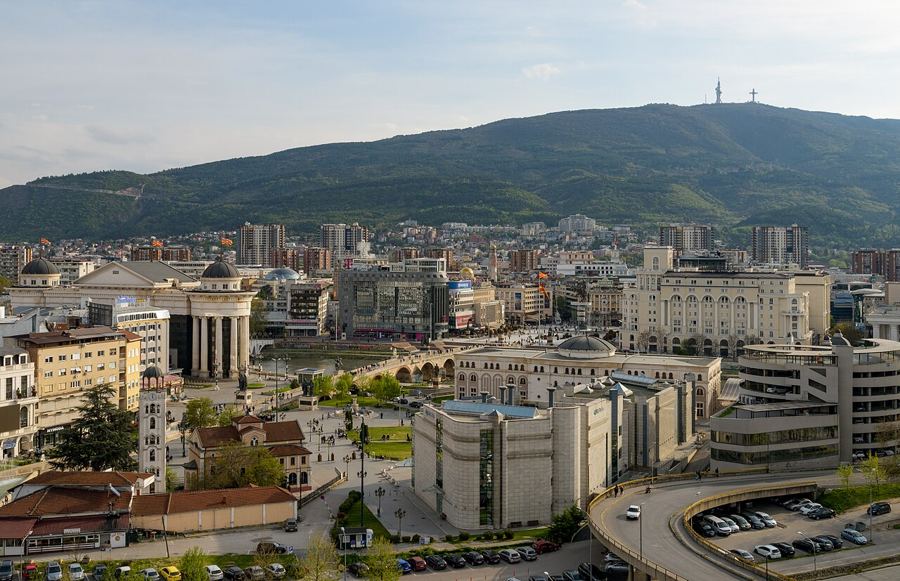 Change here for SkopjeSkopje across the border
The Pyramid and Blloku
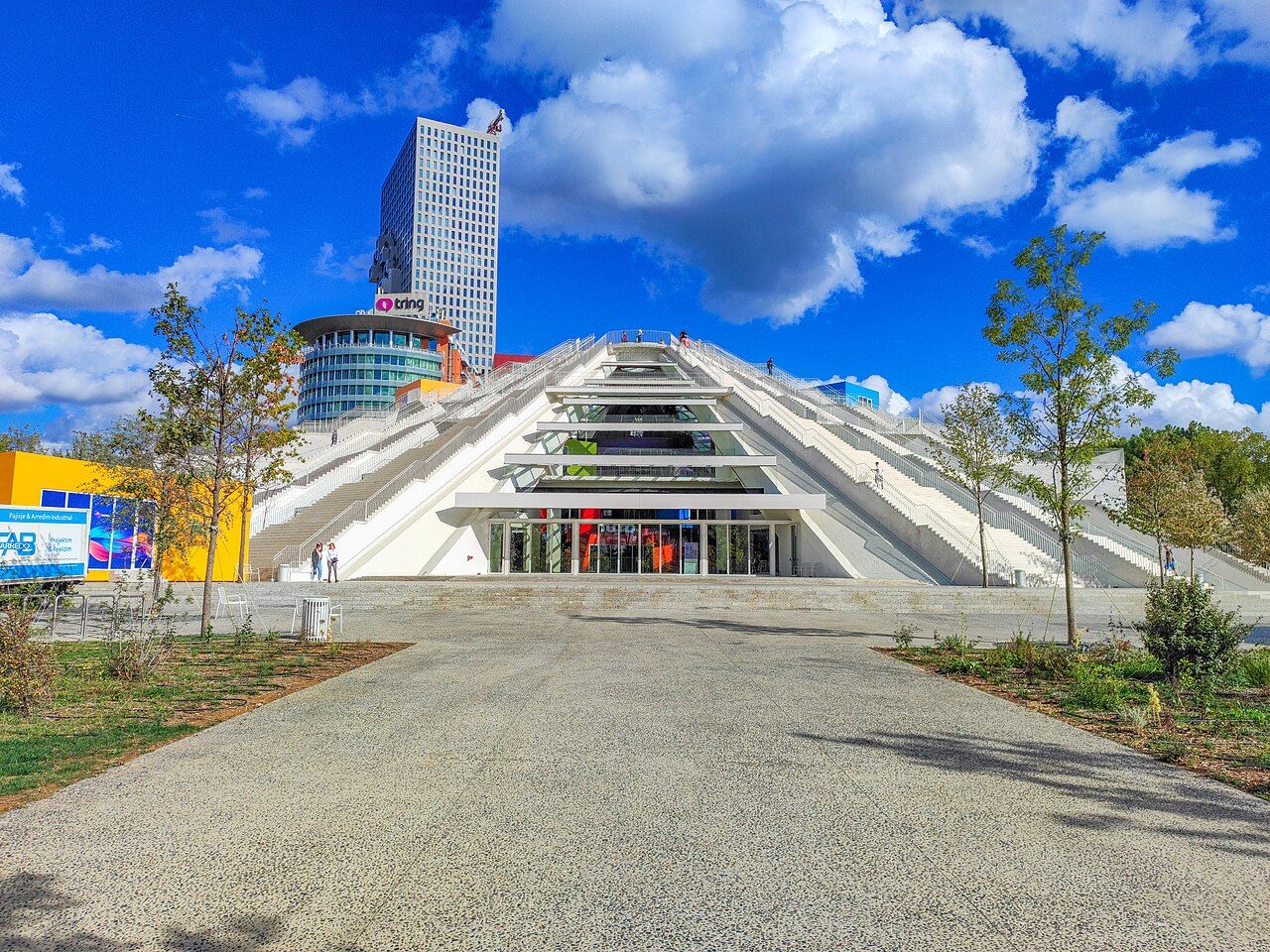
The Pyramid of Tirana was built in the late 1980s as a museum dedicated to the former communist leader Enver Hoxha. After the fall of communism it was used for many purposes and fell into disrepair. It has since been renovated and reopened with educational and cultural spaces, and steps up its sloping sides let you climb to the top for a view over the city.
A short walk west, the Blloku district was once a closed area where the party leadership lived. Today it is full of bars, cafés and shops, and it is where much of Tirana goes out in the evening. The former residence of Hoxha still stands there and is a reminder of the area's past.
Parks and the Dajti cable car
South of the centre, the Grand Park wraps around an artificial lake, with shaded paths, a loop around the water and plenty of benches. It is busy with joggers, families and dog walkers, and it is the best place in the city for a slow afternoon.
East of the city, a cable car climbs from the outskirts to the slopes of Mount Dajti, part of a national park. At the top you find forest walks, viewpoints over Tirana and space to breathe. The cable car can close in high wind or for maintenance, so check that it is running before you head out.
For a slower evening, follow the locals onto the streets for the evening walk. The main boulevards, the square and the Blloku area fill with people strolling, meeting friends and stopping for ice cream or coffee. It costs nothing and gives you a feel for the city that no museum can.
Getting there and getting around
Buses run between Pristina and Tirana through the day, usually taking four to five hours on the motorway through the mountains. They cross the border at Vërmica on the Kosovo side and Morinë on the Albanian side. Check current entry rules before you travel and carry your passport. Buses in Albania often arrive at terminals outside the centre, so allow time and cash for a city bus or taxi into town.
Albania uses the lek. Cash machines are easy to find in the centre, and euros are sometimes accepted, though usually at an unfavourable rate. Prices for food and transport are generally low, and the city's bakeries and grill houses make eating cheaply easy.
Tirana's traffic is heavy and its pavements are uneven in places, so walking needs care. City buses are cheap and run on fixed routes, and taxis are widely available; agree a price or check that the meter is running before you start.
Onward from Tirana
Tirana works as a hub for wider travel. Head north to Shkodër and the mountains for the hike from Theth to Valbona, or east towards Lake Ohrid and North Macedonia. If you are travelling on a budget, read our notes on eating cheaply first: many of the same dishes, from byrek to grilled meat, turn up on both sides of the border.