
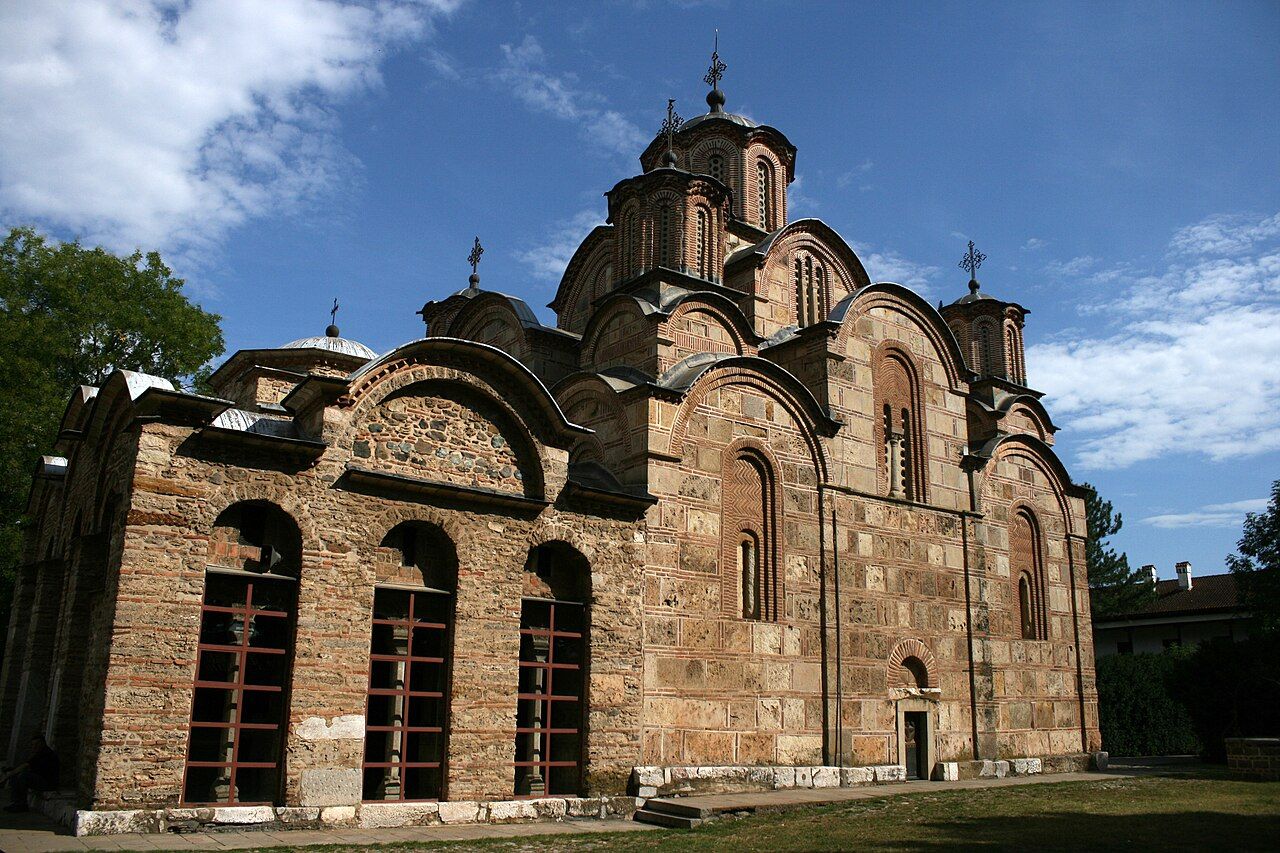
Gračanica sits only a few kilometres southeast of Pristina, yet it feels like a different place. The town is mostly Serbian-speaking, with Cyrillic signs alongside Latin ones, and at its centre stands one of the finest medieval buildings in the Balkans. A short ride further on, the fields of Ulpiana hide the foundations of a Roman town. Put the two together and you have a calm, inexpensive half-day trip from the capital.
The monastery and its history
Gračanica Monastery was built around 1321 under the Serbian king Stefan Milutin, on the site of earlier churches. Its church is a textbook example of late Byzantine architecture: a cross-in-square plan stacked upward into a cluster of domes, with walls of alternating stone and brick that glow warm in the afternoon sun. Inside, the frescoes cover almost every surface, from biblical scenes to portraits of the royal founders.
In 2006 Gračanica was added to UNESCO's World Heritage List as part of the Medieval Monuments in Kosovo, together with the Patriarchate of Peć, Visoki Dečani and the Church of Our Lady of Ljeviš in Prizren. The group is also on UNESCO's List of World Heritage in Danger, which reflects concerns about conservation and security. Today the monastery is home to a community of nuns.
Visiting respectfully
Gračanica is an active religious house, not a museum, and a little care goes a long way.
- Dress. Cover shoulders and knees. Women are often expected to wear a skirt and may be asked to cover their hair; wraps are sometimes available at the entrance, but bring your own scarf to be safe.
- Photography. Taking pictures inside the church is usually not allowed. Ask before you raise a camera, and keep phones quiet.
- Services. If a service is under way, stand quietly at the back or come back later.
- ID. Carry your passport or ID card. Security arrangements at Serbian Orthodox sites in Kosovo have changed over the years, and you may be asked to show it.
Opening times, any donation or ticket arrangements and rules on visits can change, so check before you go. Mornings and late afternoons tend to be quieter than midday.
Spend some time in the grounds as well. The walled garden is peaceful, and walking slowly around the outside of the church lets you see how the domes build up, layer by layer, to the central tower.
The town of Gračanica
The town around the monastery is small and easy to explore. You will notice a different atmosphere from Pristina: other flags, Cyrillic shop signs, and a mix of languages on the street. Both Albanian and Serbian are official languages in Kosovo, and many people in the area use Serbian day to day. Kosovo's status is one of the region's most sensitive questions, and in a town like this it is wise to listen more than you talk and to keep political opinions to yourself.
Simple bakeries and grills line the main road if you need lunch, and prices are similar to those in the capital.
 Change here for PristinaPristina in a day, on foot and on a shoestring
Ulpiana, the Roman town next door
A short way from the monastery lie the remains of Ulpiana, one of the most important Roman towns in this part of the Balkans. It grew in the second century AD, probably under the emperor Trajan, in an area rich in metals, and became a regional centre. After an earthquake in the early sixth century, the emperor Justinian had it rebuilt and renamed Iustiniana Secunda.
What you see today is an archaeological park rather than a standing city: low stone walls marking streets, the outline of an early Christian basilica with its rounded apse, parts of the town walls and a burial area. Excavations continue, and new sections are uncovered and reburied as the work goes on. Paths and simple information boards help you make sense of the layout.
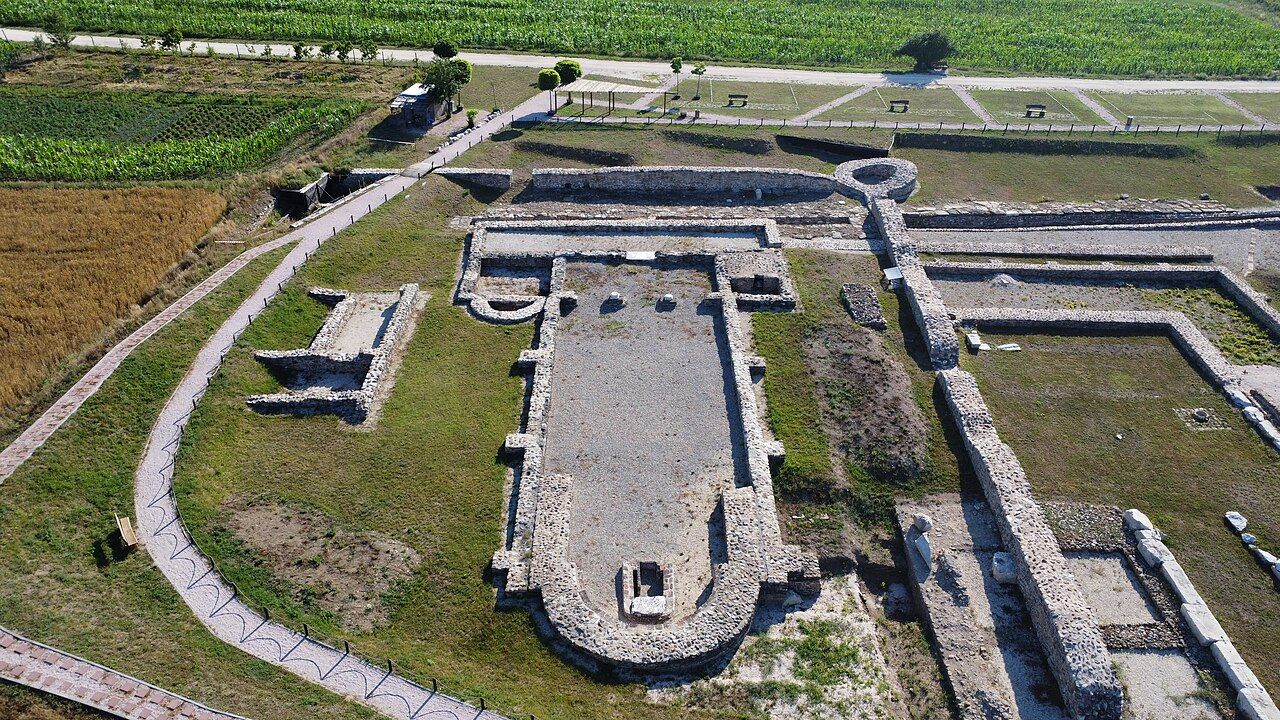
It takes an hour or so to walk around. Bring water and a hat in summer, as there is very little shade, and wear shoes you do not mind getting dusty. Access arrangements change from season to season, so check before you go whether the site is open.
Getting there and timing it
Local buses and minibuses run between Pristina and Gračanica through the day, and the trip takes around twenty minutes depending on traffic. Ask at the main bus station or look for minibuses showing the town's name. A taxi from the centre is also affordable if you share it; agree the fare first or ask for the meter.
From the monastery to Ulpiana is a walk of roughly half an hour along local roads, or a short taxi ride. The roads are not designed for pedestrians, so take care and walk facing the traffic. Departure times move with the seasons, so ask at the bus station the day before, especially for the last bus back.
A sensible plan is to leave Pristina in the morning, visit the monastery first while it is quiet, eat lunch in town, then see Ulpiana in the early afternoon before heading back. If you enjoy medieval churches, Gračanica is a good introduction before the larger monasteries in the west: the Patriarchate of Peć and Visoki Dečani share the same UNESCO listing and a similar painted richness.
Before you set out
A short checklist keeps the day smooth.
- Carry your passport or ID card.
- Pack a scarf and clothes that cover shoulders and knees.
- Take cash in small amounts for the bus, a donation or a snack.
- Bring water, a hat and sun cream for Ulpiana.
- Note the time of the last bus back to Pristina.
It is a short trip, but one that shows you a lot about the country's layered past in a single afternoon.