
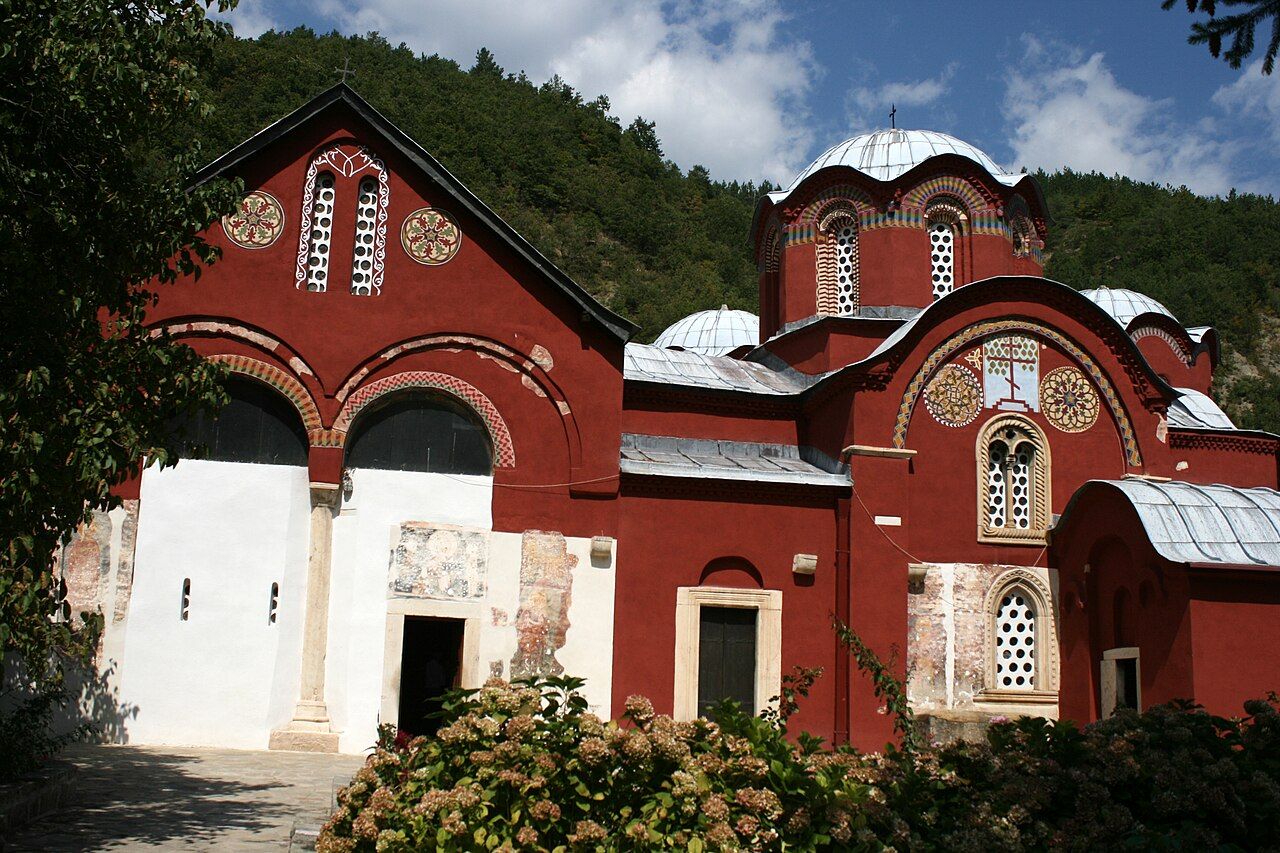
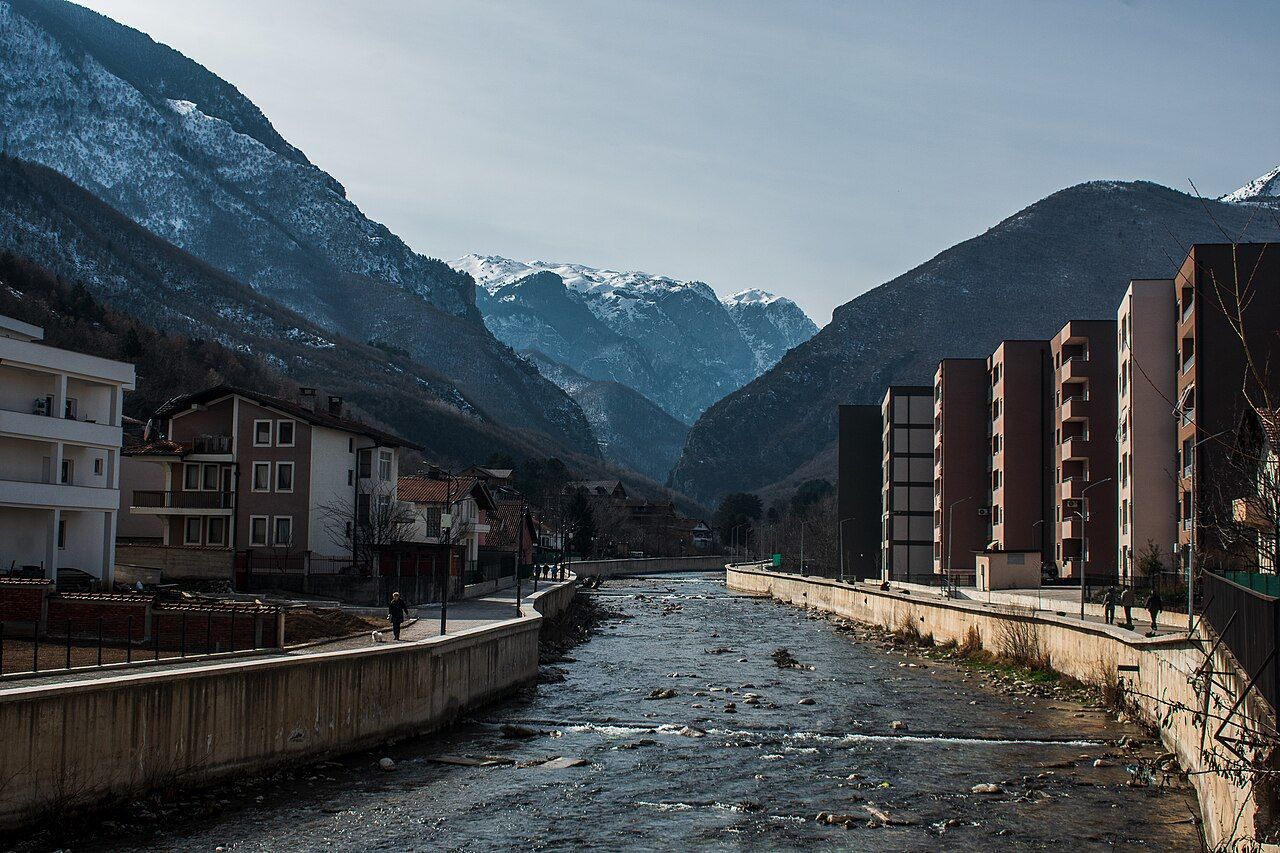
Peja is where Kosovo's flat central plain ends and the mountains begin. Walk to the western edge of town and the walls of the Accursed Mountains rise almost straight up in front of you, often still snowy in spring. The town itself is relaxed and easy to like, with a rebuilt bazaar, a busy river promenade and plenty of cheap food. Just outside it, at the mouth of the Rugova gorge, stands the Patriarchate of Peć, a cluster of medieval churches that is among Kosovo's most important religious sites.
The town is Peja in Albanian and Peć in Serbian. You will see both names on maps and signs.
The Patriarchate of Peć
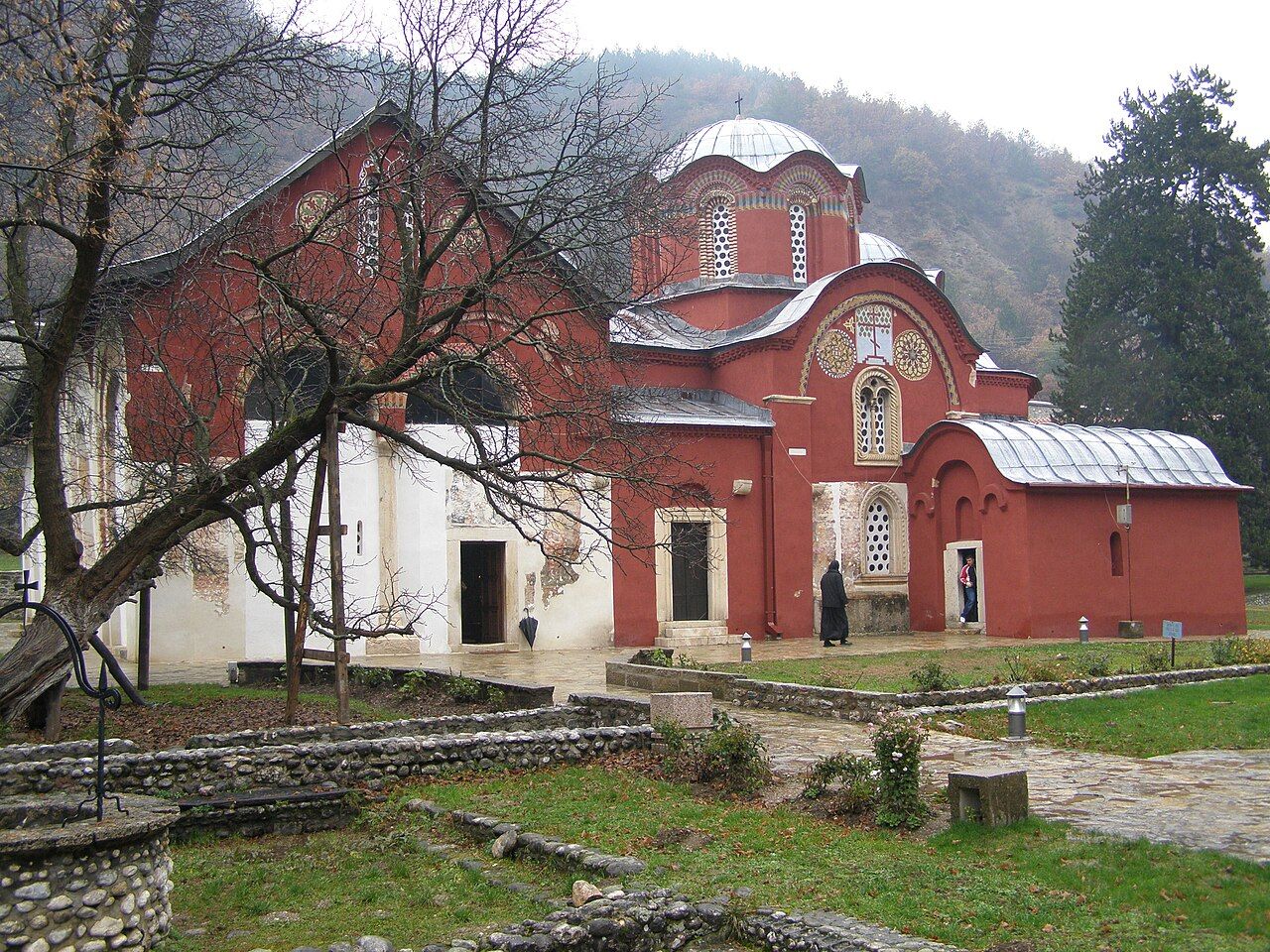
The Patriarchate is a complex of churches joined together under one roof, painted a deep red on the outside. The oldest parts date from the thirteenth century, and others were added through the fourteenth. For centuries it was the seat of the Serbian Orthodox patriarchs, and it remains a monastery today, home to a community of nuns.
Inside, the churches are dim and full of frescoes, layered over several centuries. Even if you know little about Orthodox art, the depth of colour and the sheer number of painted figures are striking. In 2006 the Patriarchate was added to UNESCO's World Heritage List as part of the Medieval Monuments in Kosovo, alongside Gračanica, Visoki Dečani and Our Lady of Ljeviš in Prizren; the group is also on the List of World Heritage in Danger.
The monastery sits in a walled garden among old trees, about a twenty-minute walk west of the centre along the river, where the gorge begins.
Visiting respectfully
The Patriarchate is an active religious community, and visits follow its rules.
- ID. Bring your passport or ID card. Security arrangements at the monastery have changed over the years, and you may be asked to show it or leave it at the gate while you visit.
- Dress. Cover shoulders and knees. Women may be asked to wear a skirt and to cover their hair; carry a scarf.
- Photography. Photos inside the churches are usually not allowed. Ask first.
- Behaviour. Keep voices low and phones silent. If a service is in progress, wait quietly or return later.
Opening times and arrangements can change, so check before you go. The monastery has its place in a long and complicated history, and visitors of all backgrounds are expected to treat it simply as a place of worship and heritage.
The bazaar and the town centre
Peja's old bazaar, the çarshia, runs through the centre near the Bajrakli Mosque, an Ottoman-era mosque with a tall minaret. Much of the bazaar was damaged during the 1998-99 war and was rebuilt afterwards, so most of the shopfronts are recent, but the layout of narrow lanes and the trade in everyday goods continue. Expect clothes, household goods, jewellery, local cheese and honey, and the occasional craftsman at work.
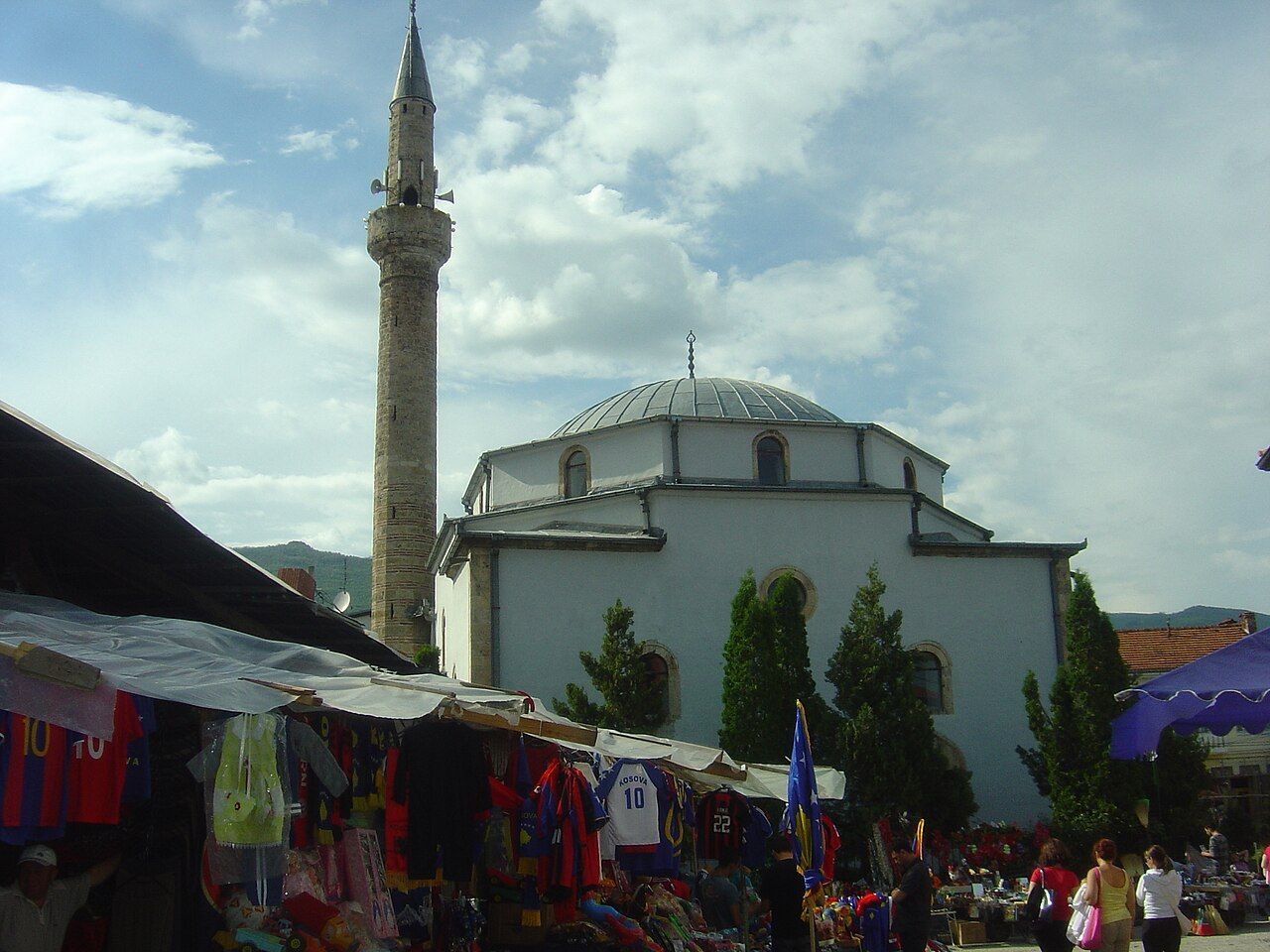
Look out for the white felt caps, the plis, still worn by some older men, and for stalls of mountain produce brought down from the villages: cheese, honey, dried herbs and, in late summer, wild berries. Bargaining is not usual in ordinary shops, but a friendly question about where something comes from often starts a conversation.
The pedestrian streets nearby fill with people in the evening, much as in Pristina, and the cafés along the river make good places to rest your legs. Food is cheap: try burek from a bakery for breakfast, a plate of grilled meat for dinner, or a bowl of flija, a layered dish cooked slowly under a lid of embers, if you see it on a menu.
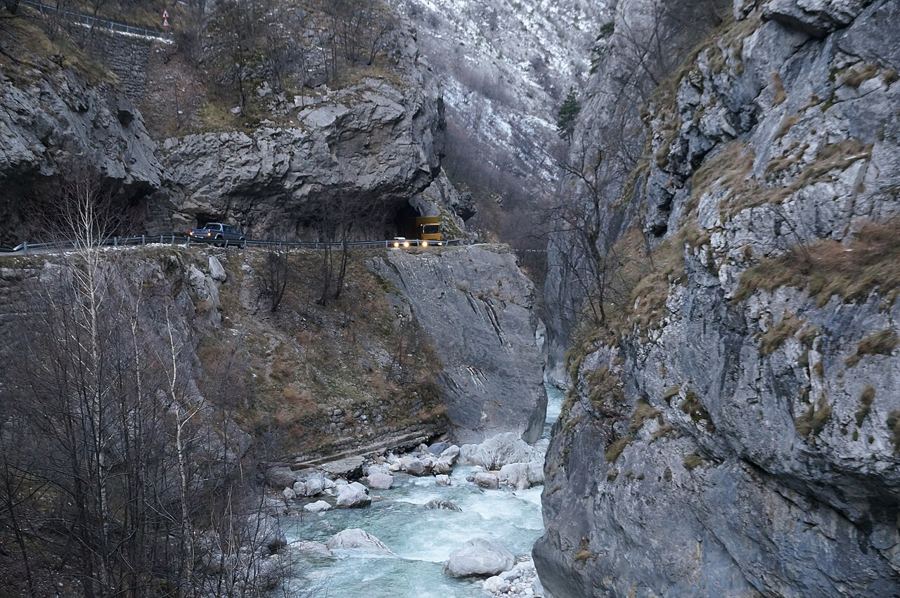 Change here for RugovaHiking the Rugova Canyon into the Accursed Mountains
The river and the start of the Rugova gorge
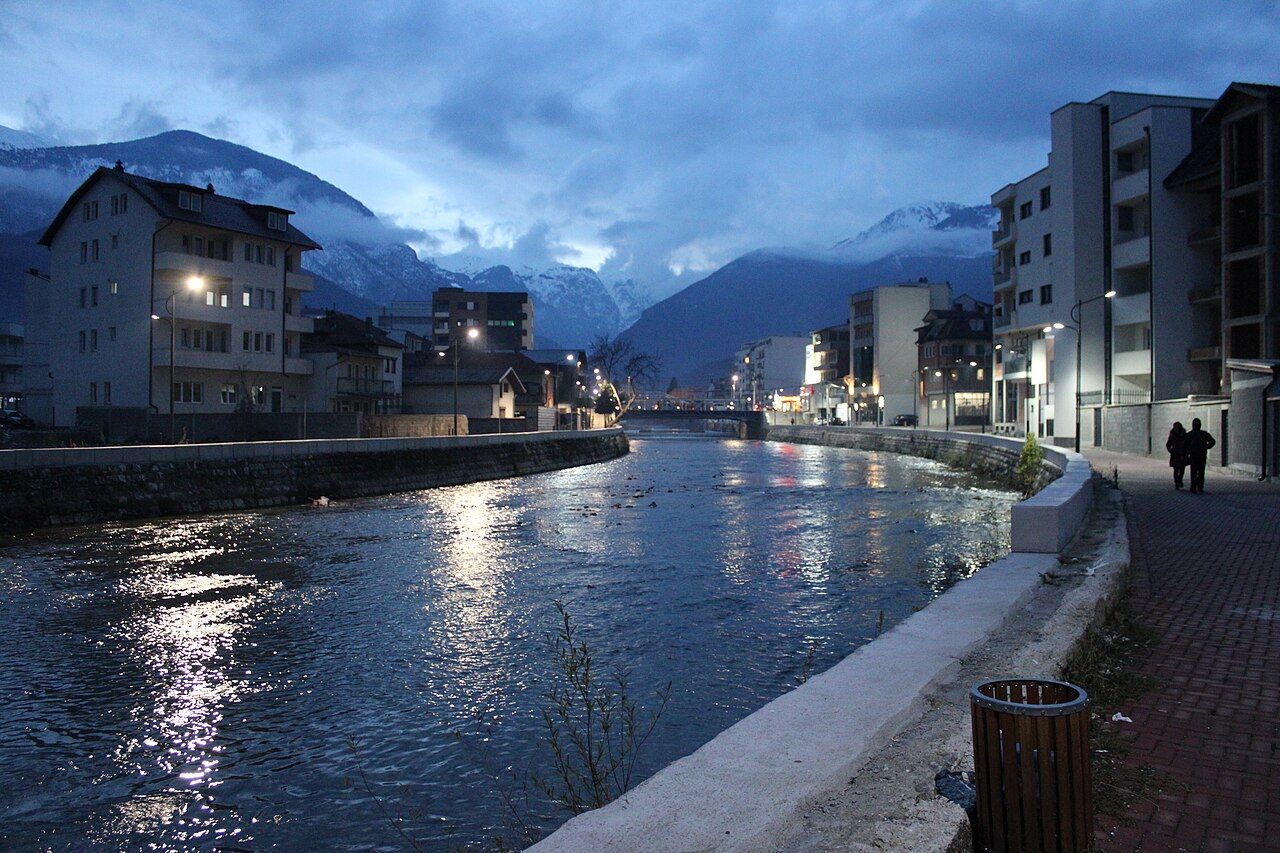
The Lumbardhi i Pejës river (the Pećka Bistrica in Serbian) runs straight through town from the gorge. Paths follow it on both banks, and walking upstream is the simplest way to understand Peja's setting: houses give way to trees, the valley narrows and the mountains close in. In early evening, the light on the peaks behind town is lovely.
Past the Patriarchate, the road enters the Rugova gorge, a deep limestone canyon that leads up into the high villages of the Accursed Mountains (Bjeshkët e Nemuna in Albanian, Prokletije in Serbian). Even a short walk or ride into the gorge is worth it, and serious hikers use Peja as a base for multi-day routes. Our guide to hiking the Rugova Canyon covers it in detail, and the long-distance Peaks of the Balkans trail passes through the same mountains.
Walk to the western edge of town and the walls of the Accursed Mountains rise almost straight up in front of you, often still snowy in spring.
Short trips around Peja
Peja makes a good base for more than the gorge. A few easy outings fill a spare half-day:
- The source of the White Drin. North of town, near the village of Radavc, the Drini i Bardhë river rises from the foot of a cliff in a pool of clear water, with a waterfall nearby. Close by is the Radavc cave, which can be visited on guided tours in season; check before you go.
- Kulla houses. The countryside around Peja and Deçan has many kulla, stone tower houses built as fortified family homes. Some are preserved as heritage buildings and can be seen from the outside.
- Village walks. The foothills just outside town have quiet roads through orchards and small villages, easy to explore on foot or by bicycle.
A taxi is the simplest way to reach most of these places, and fares are modest if you share. Agree the price before you set off, including any waiting time.
When you come back into town in the evening, the river promenade and the pedestrian streets are the place to be. Families walk up and down, children play, and the cafés stay busy until late. It is an easy, friendly scene, and a pleasant end to a day in the mountains.
Practical notes for Peja
- Getting there. Buses run frequently from Pristina and take around ninety minutes. There are also regular connections to Gjakova, Prizren and Deçan, and to Montenegro across the mountains. Departure times move with the seasons, so ask at the bus station the day before.
- Getting around. The centre is walkable. Taxis are cheap for the ride to the Patriarchate or the gorge if you are short on time.
- Weather. Peja is cooler than Pristina, and the mountains make their own weather. Bring a warm layer even in summer, and expect snow in the high country from late autumn.
- Nearby. Visoki Dečani Monastery is a short bus ride south, and Gjakova is under an hour away.
Plan on two nights at least. One day for the town and the Patriarchate, another for the gorge, and you will still want to come back.