
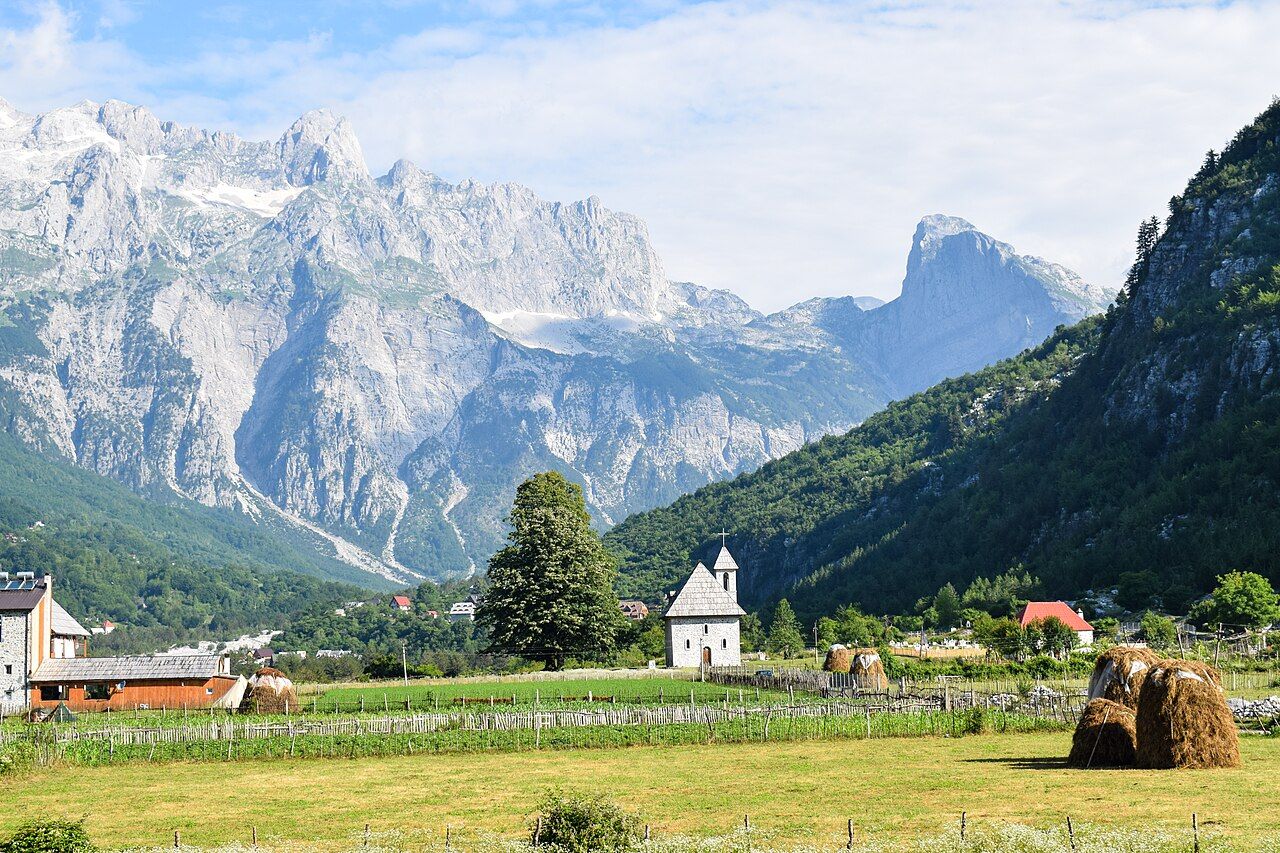
The walk from Theth to Valbona is the classic hike of the Albanian Alps, part of the range that Albanians call Bjeshkët e Nemuna, the Accursed Mountains. It links two high valleys, Theth to the west and Valbona to the east, over a pass of about 1,800 metres. The day is long but the path is clear in summer, and it rewards you with limestone walls, beech forest and wide views back into both valleys.
From Kosovo, it is easy to build the hike into a loop: reach Valbona through Gjakova and the town of Bajram Curri, walk to Theth, then go out via Shkodër, or reverse it and add the boat along Lake Koman.
Theth: the valley, the tower and the Blue Eye
Theth is a scattered village in a deep valley ringed by peaks, with stone houses, hay fields and a small church that stands alone in a meadow. The road into the valley has been improved in recent years, and the village now fills with hikers in summer, but it still feels remote once you walk a little way from the centre.
The lock-in tower, Kulla e Ngujimit, is a stone tower house where men who were at risk in a blood feud once shut themselves away for safety. Blood feuds were governed by the Kanun, a body of customary law long used in the northern mountains. The tower is now a small museum, and a visit gives useful context for the region's history.
Two walks from the village are popular before or after the pass. The Blue Eye, a cold, deep pool fed by a spring, lies a few hours' walk down the valley. The Grunas waterfall is a shorter outing from the village. Both are busy in midsummer, so go early.
Most hikers spend a night or two in Theth before the pass. The village has many family guesthouses, from old stone houses with a few rooms to newer buildings, and most offer half board with home cooking. In July and August, contact a place a few days ahead if you can, since the valley can fill up. Out of season, many houses close, so check that someone will be there before you travel.
The hike over the pass
Most hikers take six to eight hours from one valley to the other, including stops. From the Theth side, the path climbs through beech forest and then across open, stony slopes in a long series of switchbacks to the pass, Qafa e Valbonës. The descent towards Valbona crosses scree and woodland before reaching the valley floor, followed by a long, flat walk along the valley to the village.
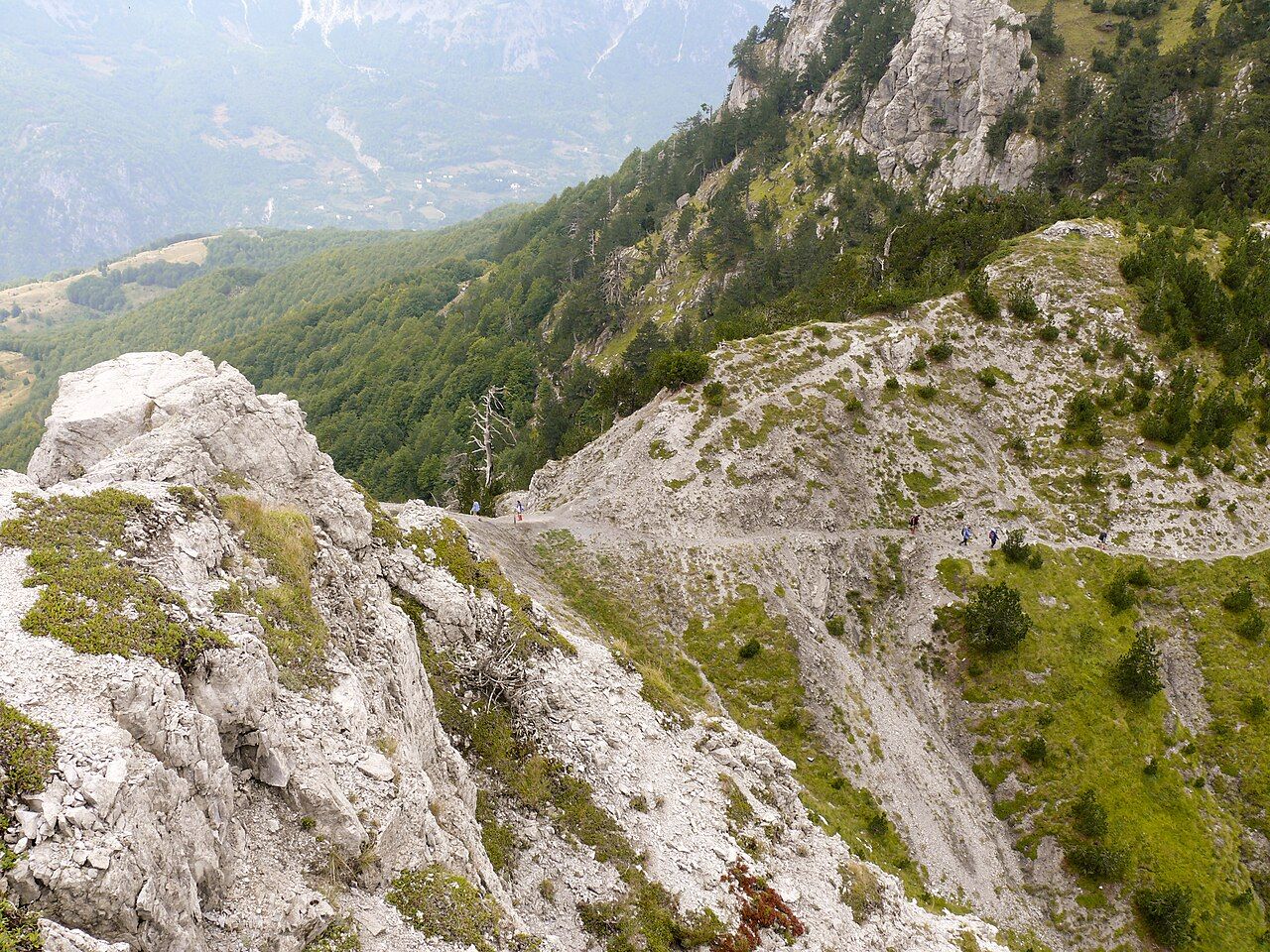
The trail is waymarked and well trodden in summer, but conditions change quickly. Start early, take more water than you think you need, and be ready for heat on the open slopes and cold at the top. In summer, small seasonal stops near the pass sometimes sell drinks, but do not depend on them.
Walking from Theth to Valbona or the other way round makes little difference to the total effort, but the profile changes. From Theth, the climb is long and steady and the descent is steeper and looser. From Valbona, the long valley walk comes first, and the final climb to the pass is steep. Whichever way you go, the scree on the descent is where most slips happen, so slow down and use poles if you have them.
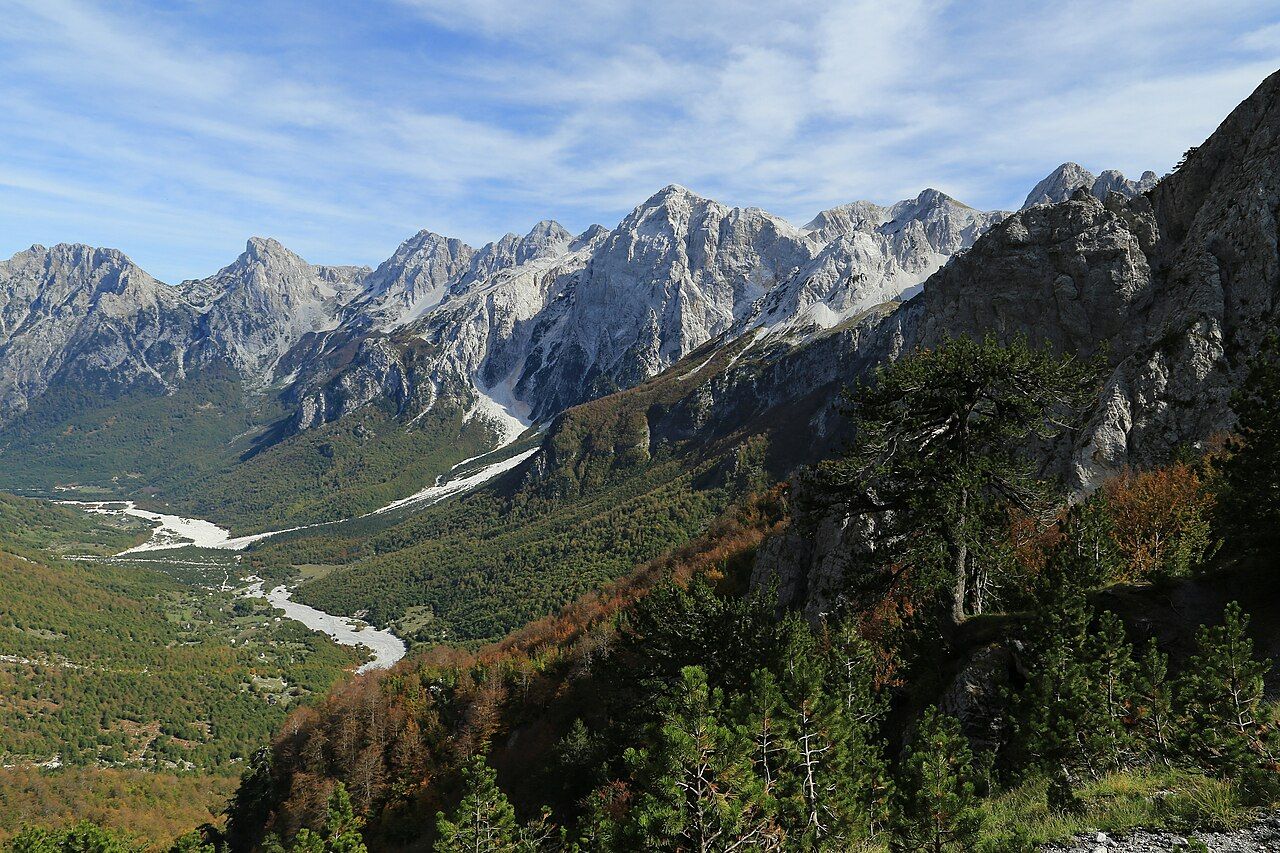
Valbona itself is a long valley rather than a compact village, with houses spread for several kilometres along the river. Note where your guesthouse lies before you set off, so you know how far you still have to walk once you reach the valley floor.
Start early, take more water than you think you need, and be ready for heat on the open slopes and cold at the top.
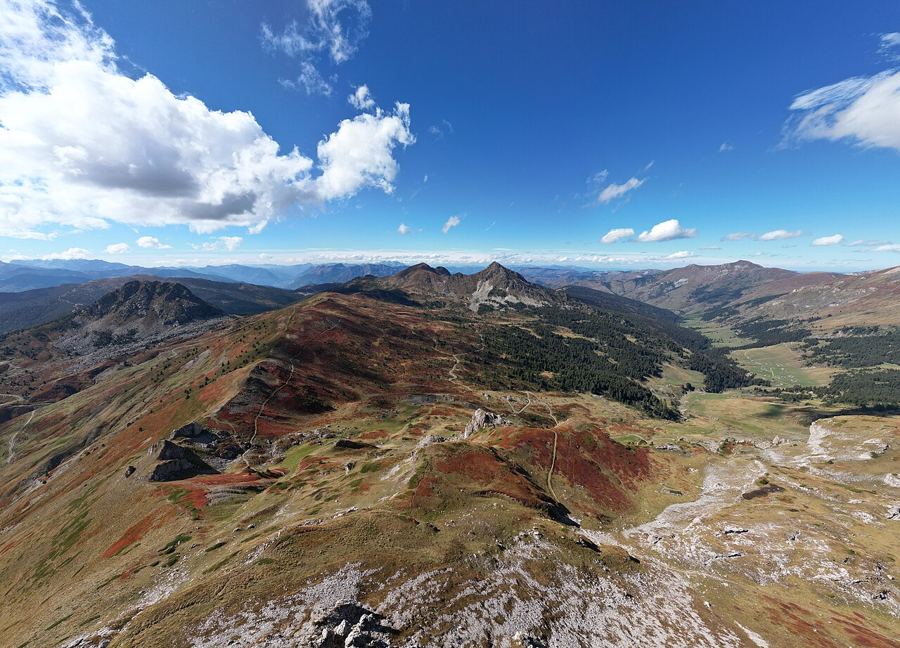 Change here for Accursed MountainsThe Peaks of the Balkans trail
Timing and weather
The hiking season runs roughly from mid-June to September. Earlier in the year, snow often lies on the upper slopes, and the pass can be dangerous without experience and the right equipment. Afternoon thunderstorms are common in July and August, so aim to be over the pass by early afternoon. In September the paths are quieter and the light is clear, but days are shorter and evenings cool.
- Check the forecast the evening before and again in the morning.
- Do not set out over the pass in thick cloud or heavy rain.
- Carry cash: card payment is rare in both valleys, and there are no cash machines in the villages.
Lake Koman and the ferry
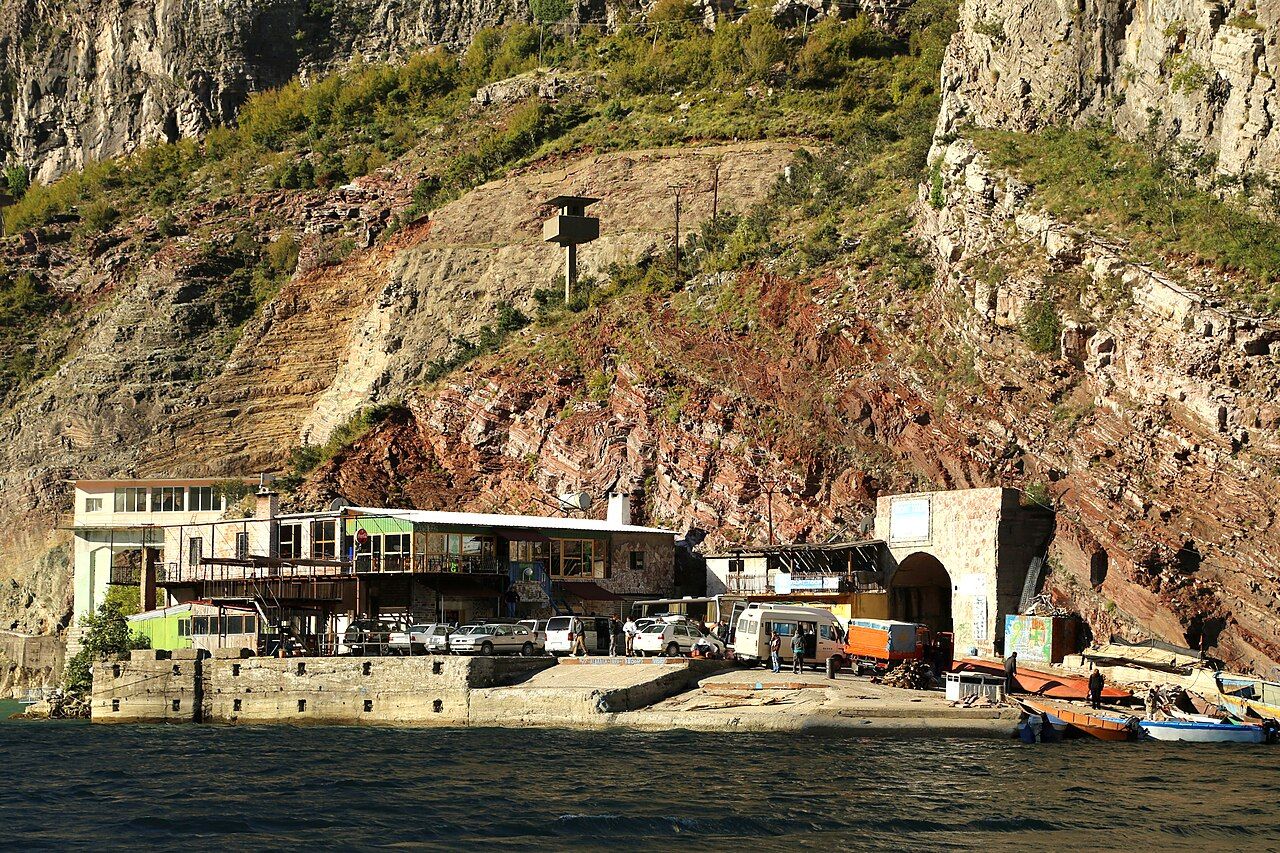
Lake Koman is a long, narrow reservoir on the Drin river, squeezed between steep mountain walls. In the warmer months, ferries and smaller boats run along it between the dam at Koman and the town of Fierza, a trip of a few hours through a deep, winding gorge. It is one of the most scenic boat journeys in the Balkans and links neatly with the hike.
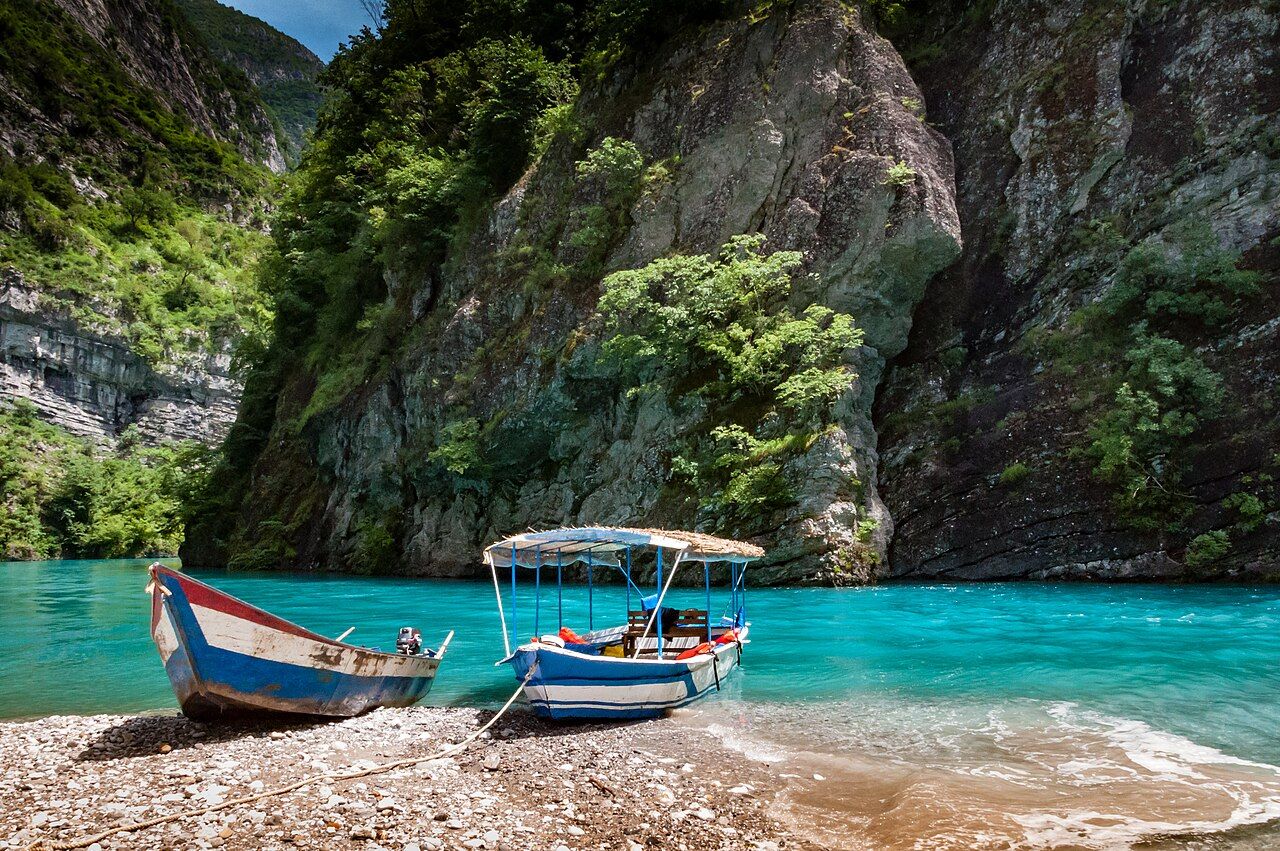
A common loop runs from Shkodër to Koman by road, along the lake by boat to Fierza, by minibus to Valbona, over the pass to Theth, and back to Shkodër by minibus. Services vary by season and are run by small operators, so confirm departure times locally a day or two ahead, and expect timings to shift.
If you have only a day or two, the boat alone is a fine trip, even without the hike. Sit on the open deck if you can, keep a warm layer handy for the shaded stretches of the gorge and bring snacks, since there may be little on board.
Getting there from Kosovo
From the west of Kosovo, buses run from Gjakova across the border towards Bajram Curri, the town at the mouth of the Valbona valley, and minibuses continue up the valley in summer. From Pristina, you can also reach Shkodër by bus and approach from the Theth side. Border rules and documents change, so check current official guidance before you travel.
Allow at least three or four days for the full loop from Kosovo, including the boat, and add a spare day for weather. Carry enough euros or Albanian lek to last until you are back in a town with a cash machine. Euros are often accepted in the north of Albania, but local currency is simpler for small payments.
Before you go, spend a day among the old shops of Gjakova's bazaar, which is the natural jumping-off point. If you have more time, combine the hike with a few days in the Rugova Canyon above Peja, or with a longer section of the Peaks of the Balkans trail, which passes through both valleys.